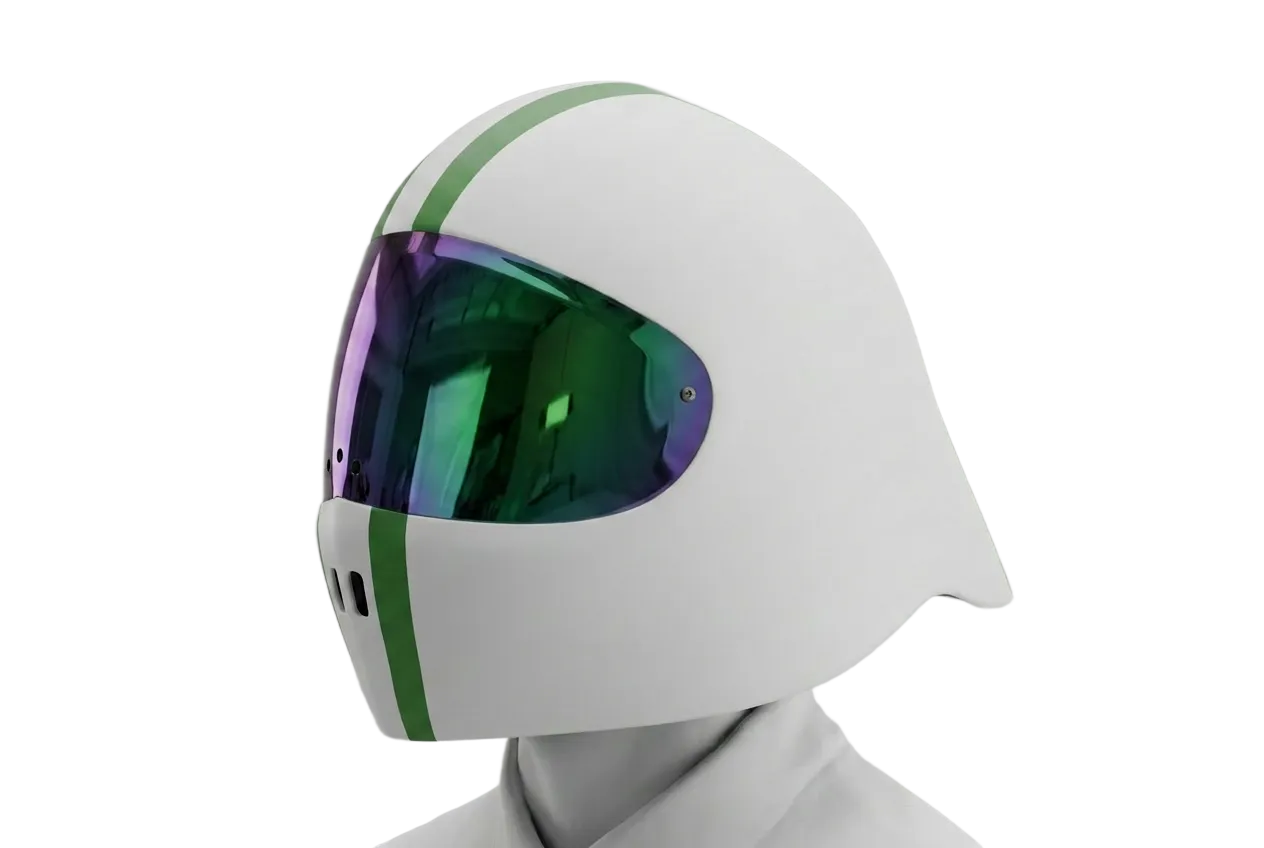
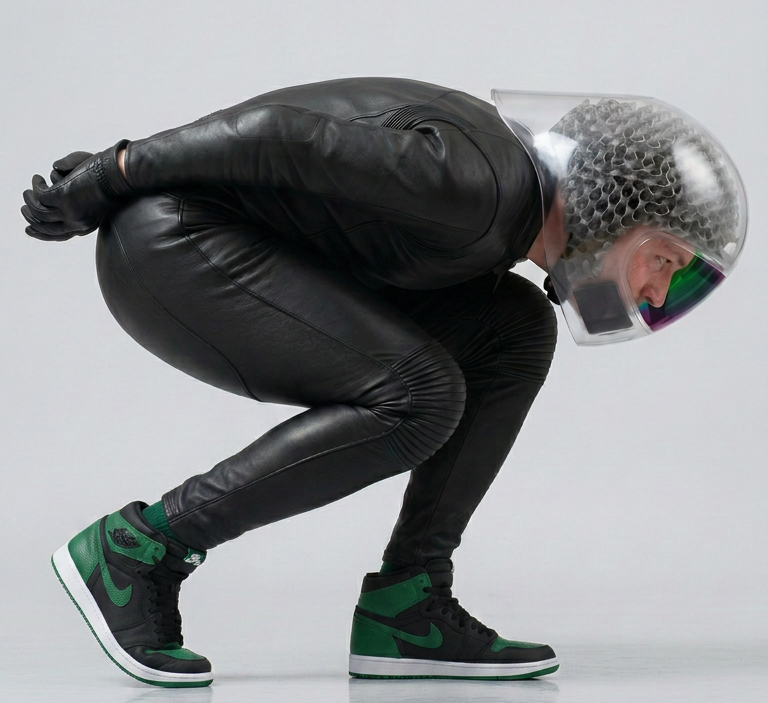
HIDRA is a modular full face downhill skateboarding helmet designed to address a gap in existing certified helmets: none are built or validated for multi impact use. It combines a composite outer shell with a personalized lattice liner, developed through additive manufacturing to improve fit, comfort and repairability.

1. Research
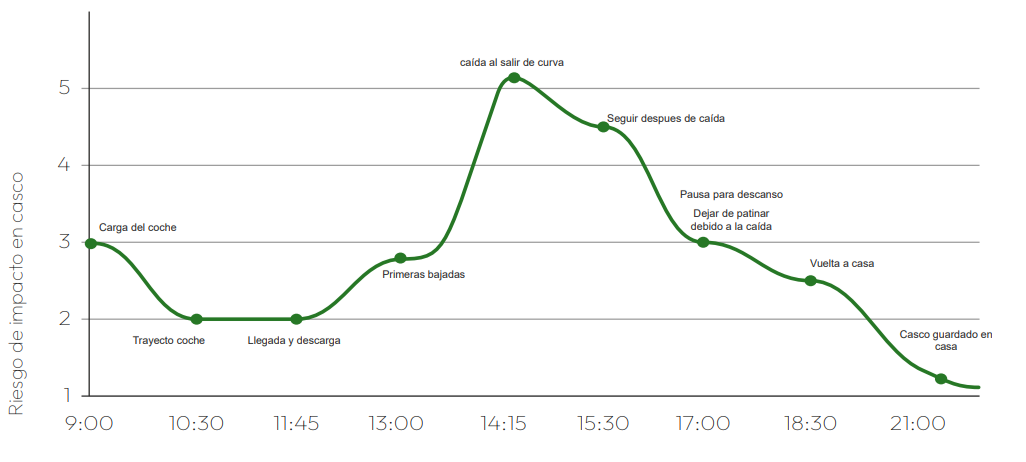
A market analysis of established downhill helmets, including Predator, TSG, and New Olders, showed none are designed or tested for repeated impacts, despite riders regularly falling during training and competition. User journey mapping across competition day and skate day profiles confirmed this as the core insight behind the project.
- Competitor benchmark: Predator, TSG, New Olders, and others reviewed against impact standards and product claims
- Finding: no production helmet addresses multi impact protection directly
- User journeys mapped across two rider profiles: competition day and casual skate day
- Insight: repeated falls are a normal part of the sport, not an edge case, yet no helmet is designed around it

I mapped two user journeys, plotting impact risk across the hours of a downhill day. The competition day journey showed risk peaking around qualifying runs and the final race. The informal skate day with friends showed risk spread more evenly, driven by casual runs and practice. Both confirmed impacts happen repeatedly within a single day, not as isolated events.

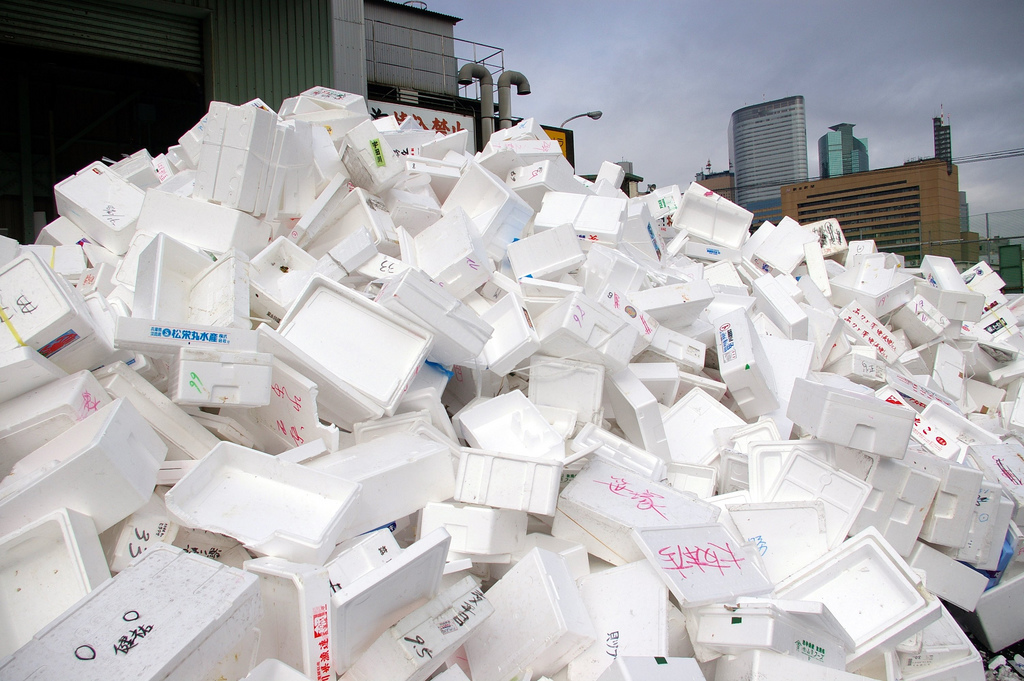
Downhill skateboarding involves repeated, high speed impacts, often with no time to inspect a helmet between runs. Standard EPS liners are built for a single hit.
- Single impact protection: EPS foam absorbs energy by crushing permanently, so it cannot protect twice
- No visible damage: a compromised liner often looks fine from the outside
- Full replacement required: one hit means replacing the entire helmet, not just the damaged part
- One size fits all: foam liners offer no personalization to individual head geometry
- High material waste: disposable helmets contribute to unnecessary production and landfill waste
2. Ideation
The shell form takes reference from the 1981 Speed Skiing Helmet by Kevan Laycraft and Alan Randall Best, part of MoMA’s collection. The color palette draws from asphalt, mountain landscapes, and downhill racing wheels.
- Shell reference: 1981 Speed Skiing Helmet (MoMA collection) as the formal starting point
- Color direction: asphalt greys, mountain landscape tones, and downhill wheel colors
- Assembly logic: rigid outer shell paired with a single piece lattice liner
- Connection method: press fit, no adhesives or snap fits, keeping the liner easy to remove and replace


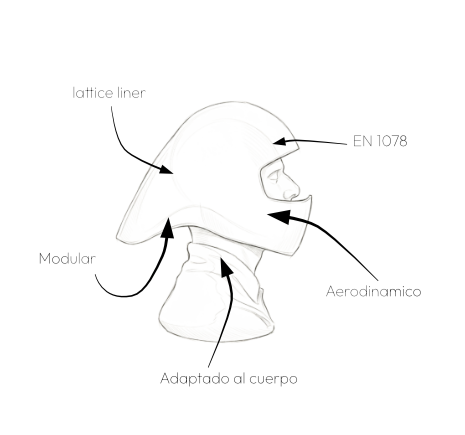
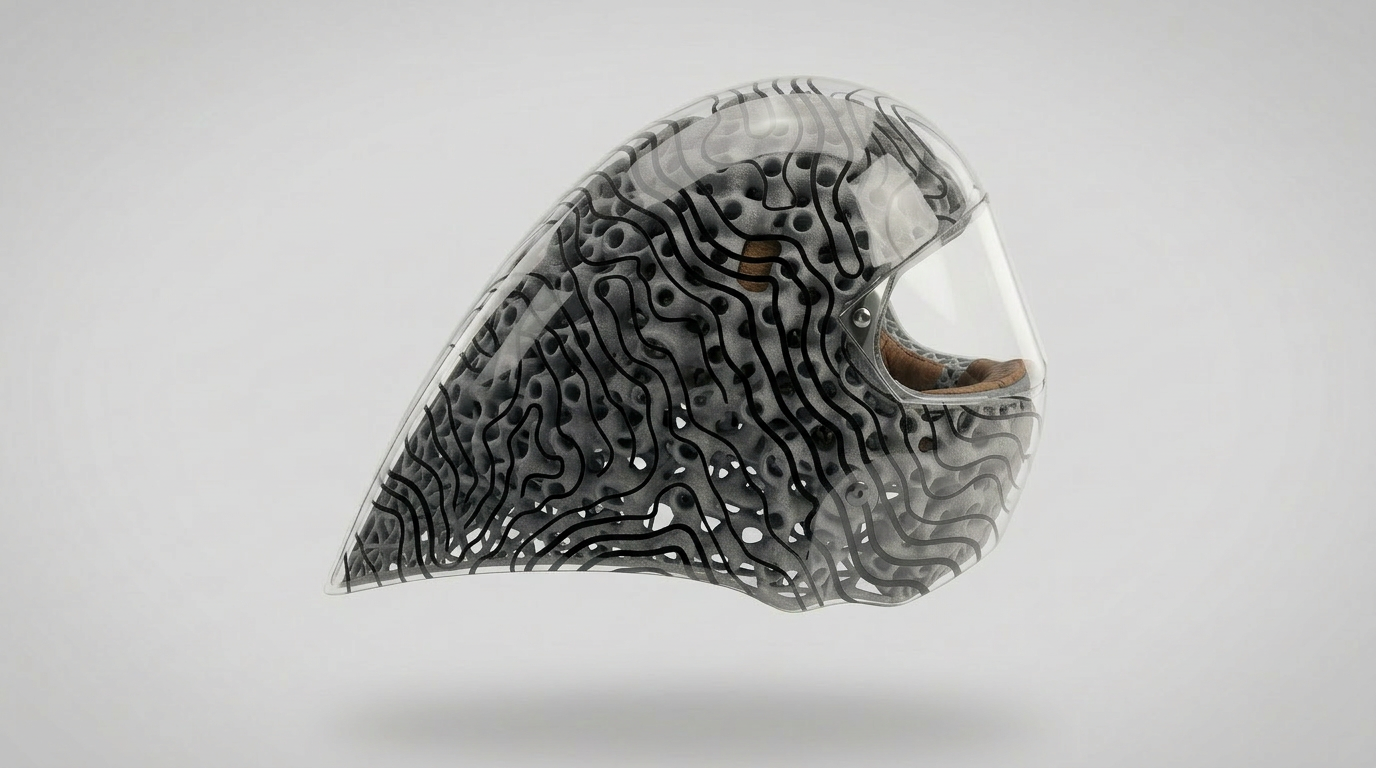
The initial concep was done using generative AI, with the software Vizcom. Once I had an idea, I modeled two shapes, one narrower, following the reference of the Speed skiing helmet, and another shape that wraps around the shoulders.
Two molds where designed to make some early stage thermoforming prototypes
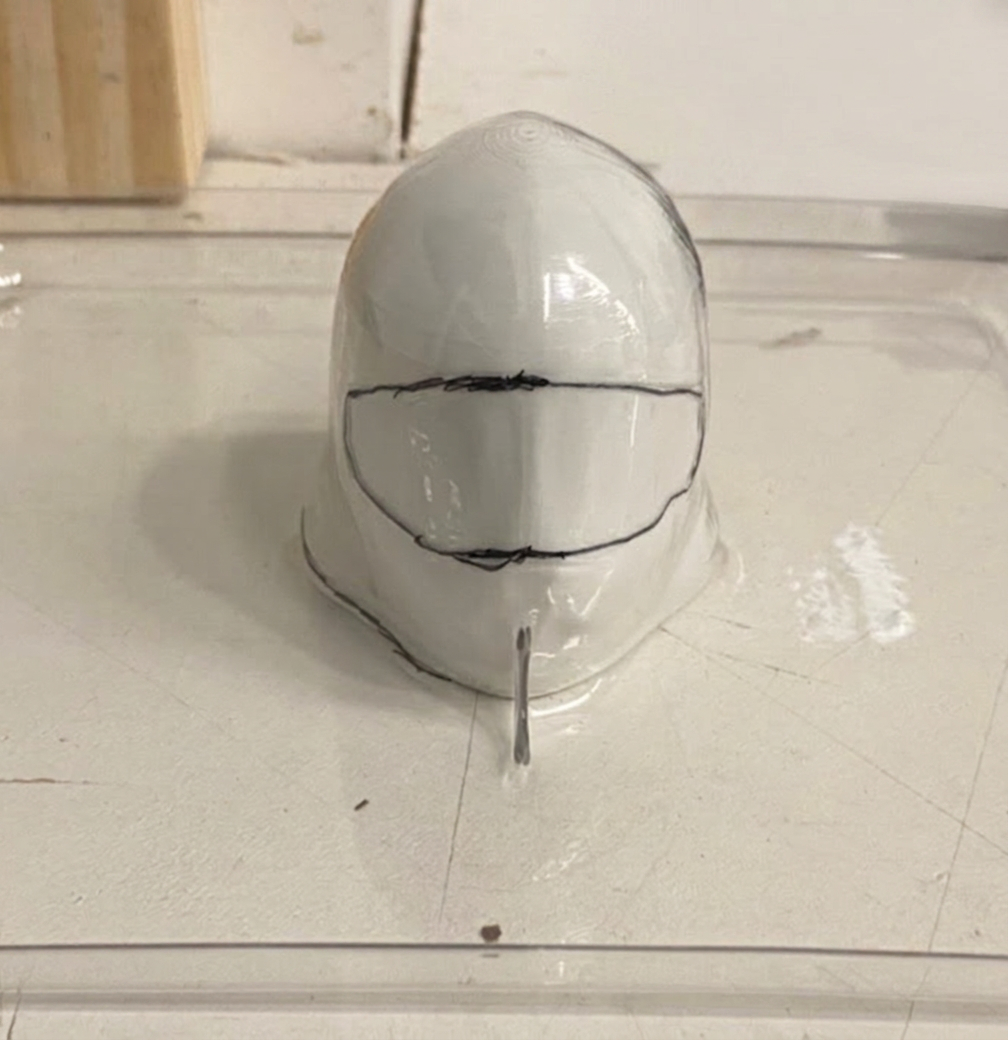
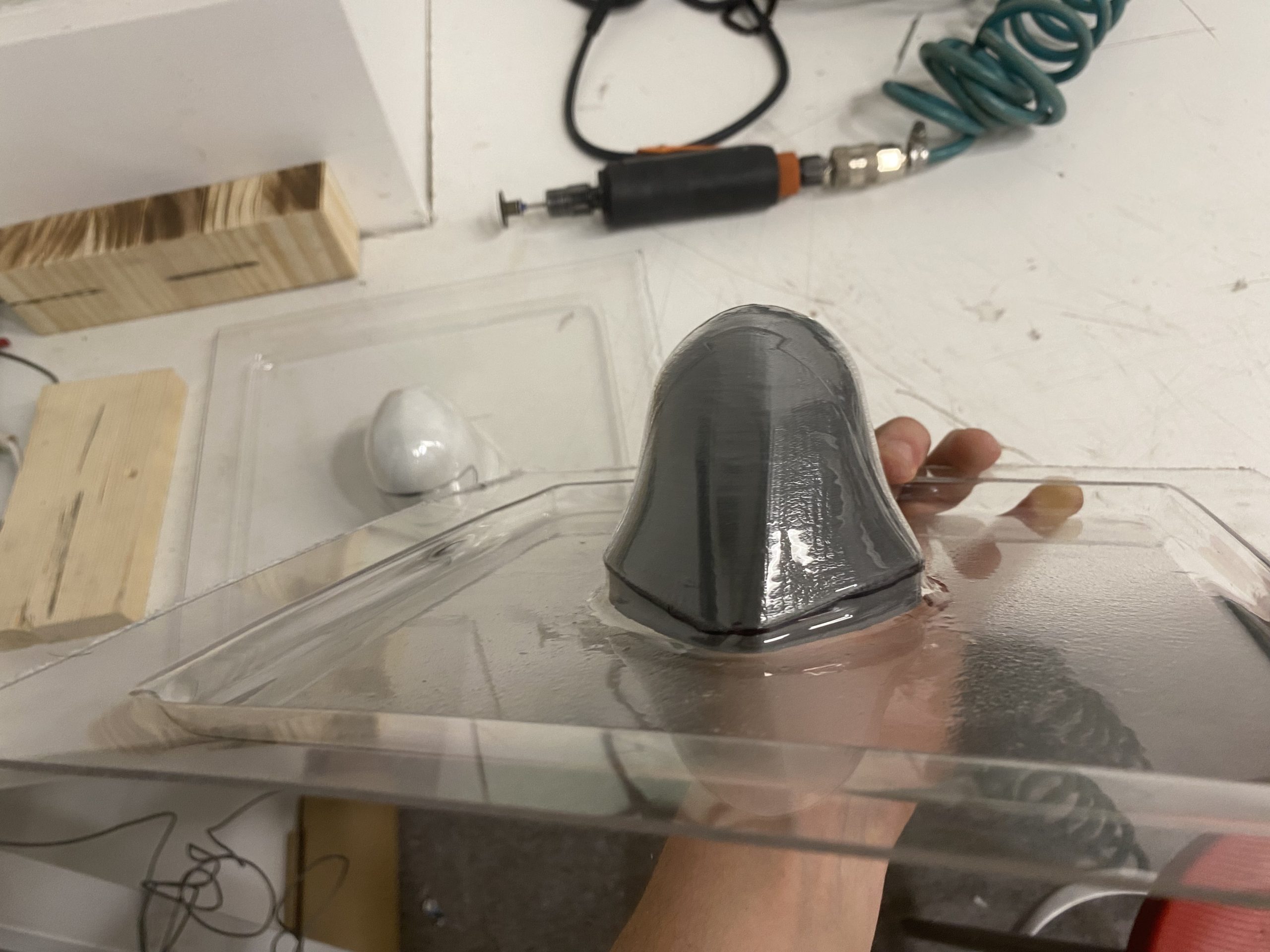


After the first iteration, the narrow shape was choosen doe to balance between aerodynamics and weight.
The first shapes where then modeled, a shell and a liner body. But these needed to be designed for my head and body, and the lattice design had just started
3. Development and prototyping
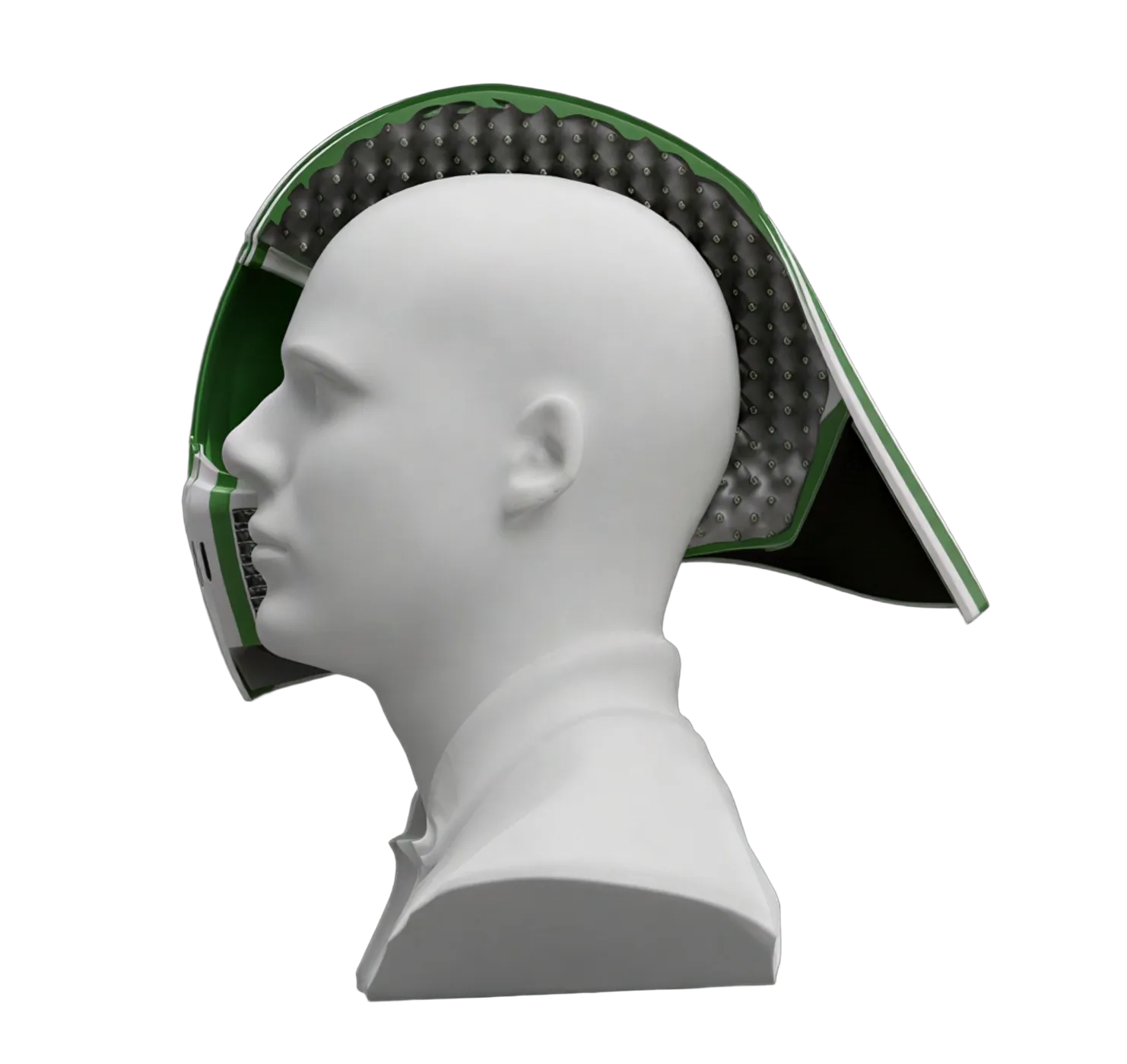
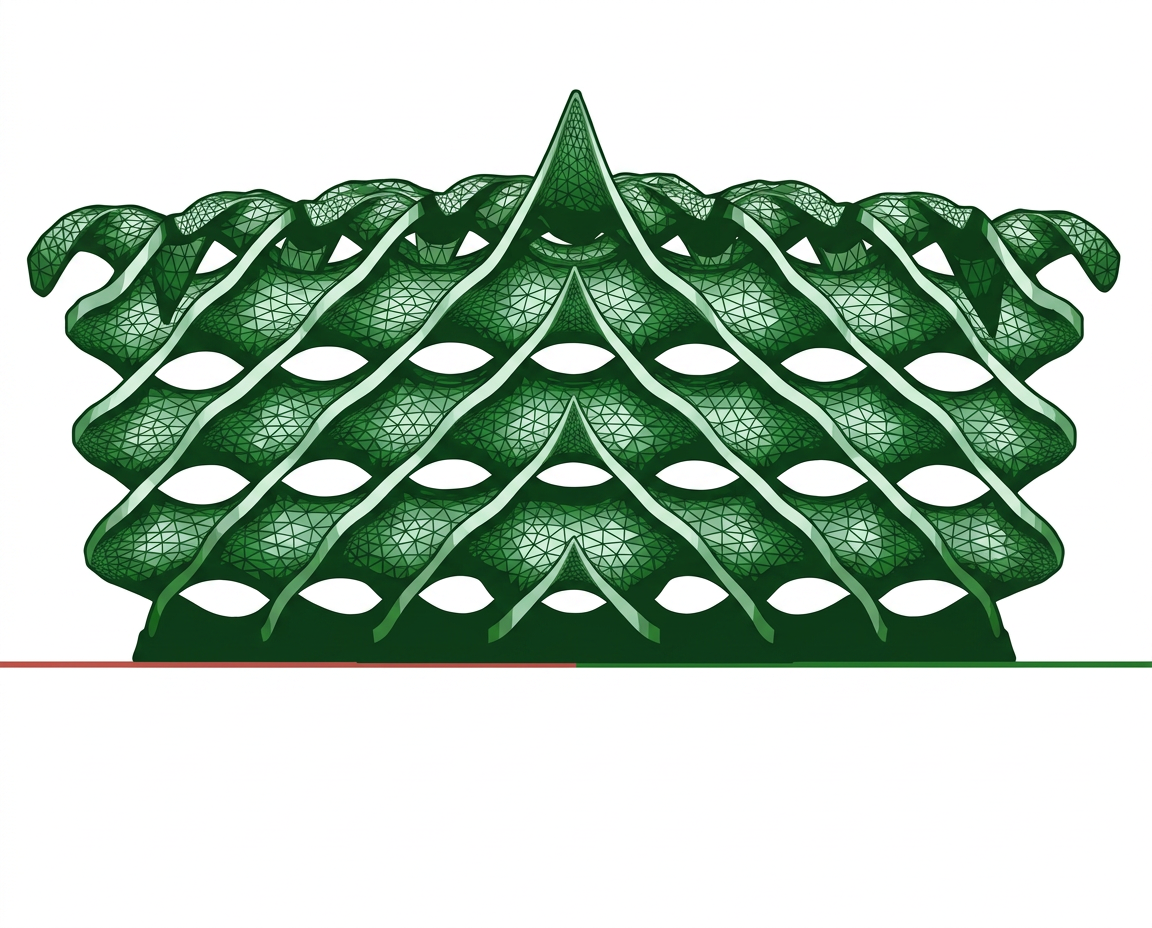
The liner is a TPU 90A gyroid lattice designed for Multi Jet Fusion and generated from a 3D scan of the rider’s head. The outer shell is designed as a composite layup over a printed mold, in a fiberglass, carbon fiber and Kevlar tricomposite. The prototypes were made in other materials, as explained below.
Development
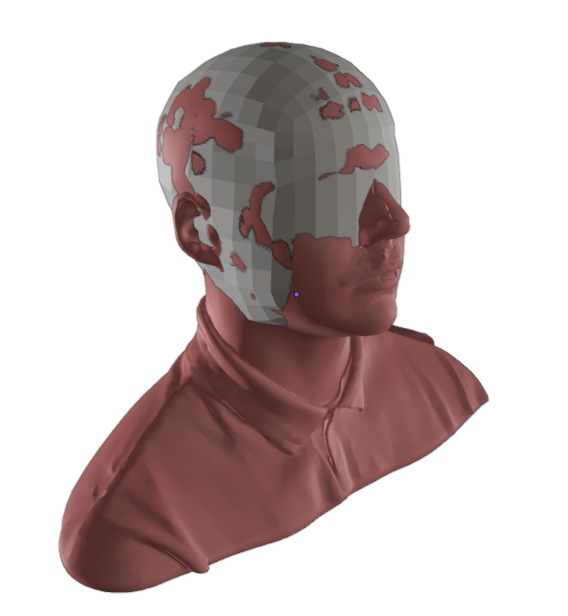
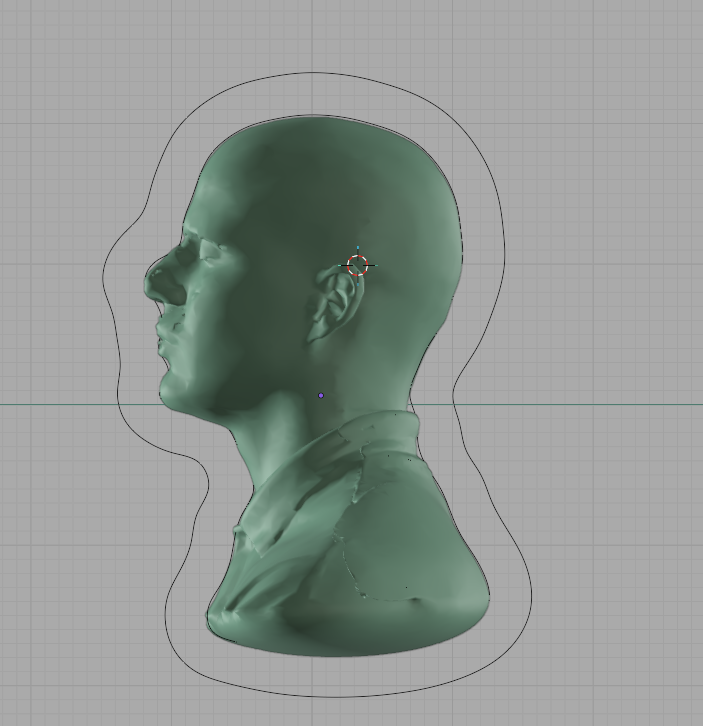
- 3D scans: my own helmet plus the rider’s head in normal and tuck positions, cleaned in Blender
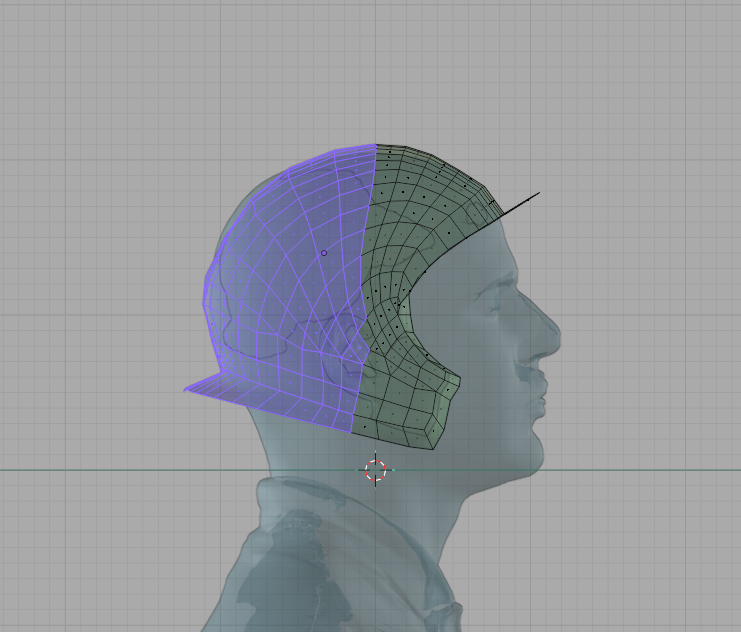
- Shell: scanned helmet reshaped to the rider’s head, with a speed skiing tail without shoulder pads and small side wings to deflect air
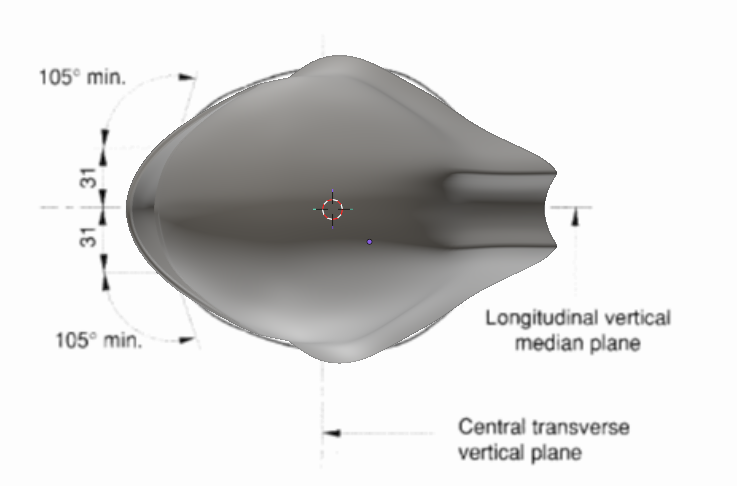
- Visor cut: traced on the 3D model to keep the EN 1078 field of view
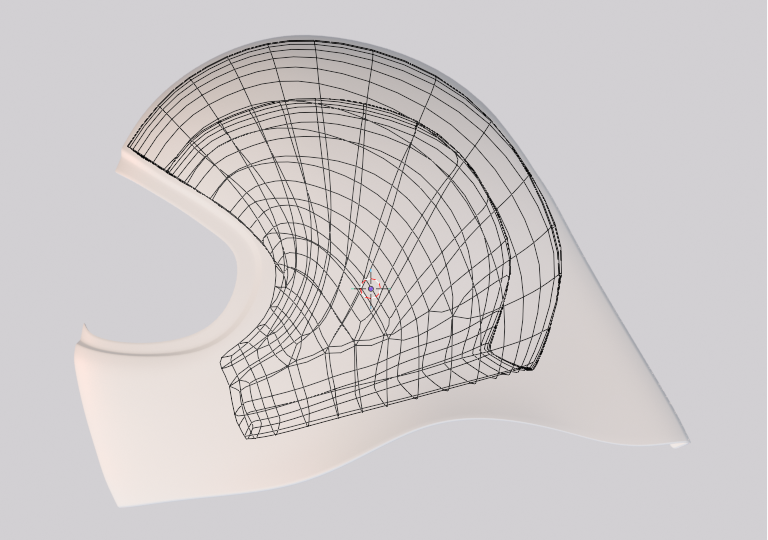
- Liner: Shrinkwrap onto a simplified head block, then a constant 30 mm offset along the normals, with ear grooves, kept as a single piece
- Shell prototype: thermoforming tested at 1:4 and discarded for poor finish, then FDM printed in PETG at 1:2, sanded and painted, plus one translucent version that shows the lattice
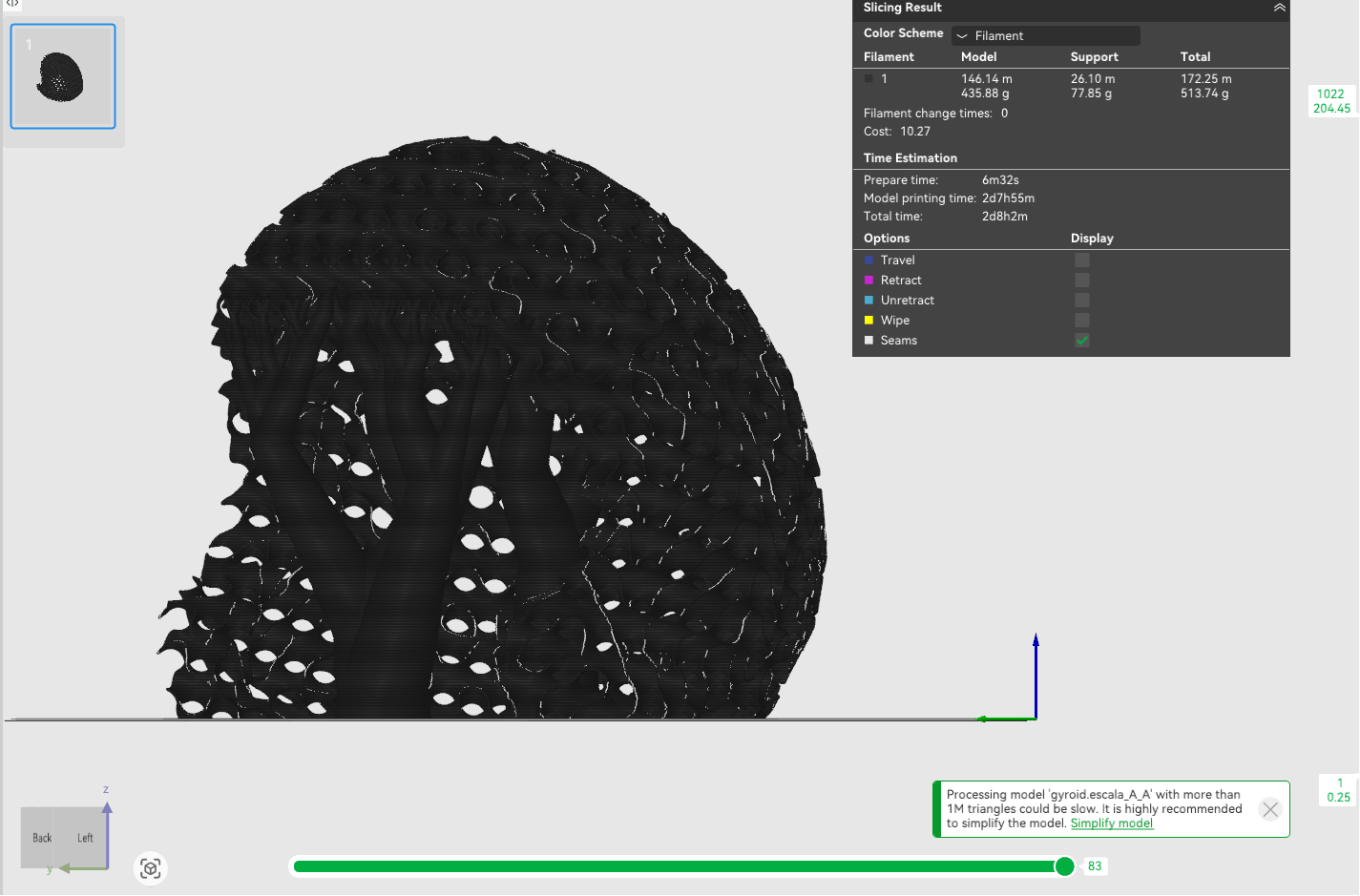
- Liner prototype: TPU 90A printed at 1:2 on a modified Bambu Lab P1S to check the lattice and the press fit
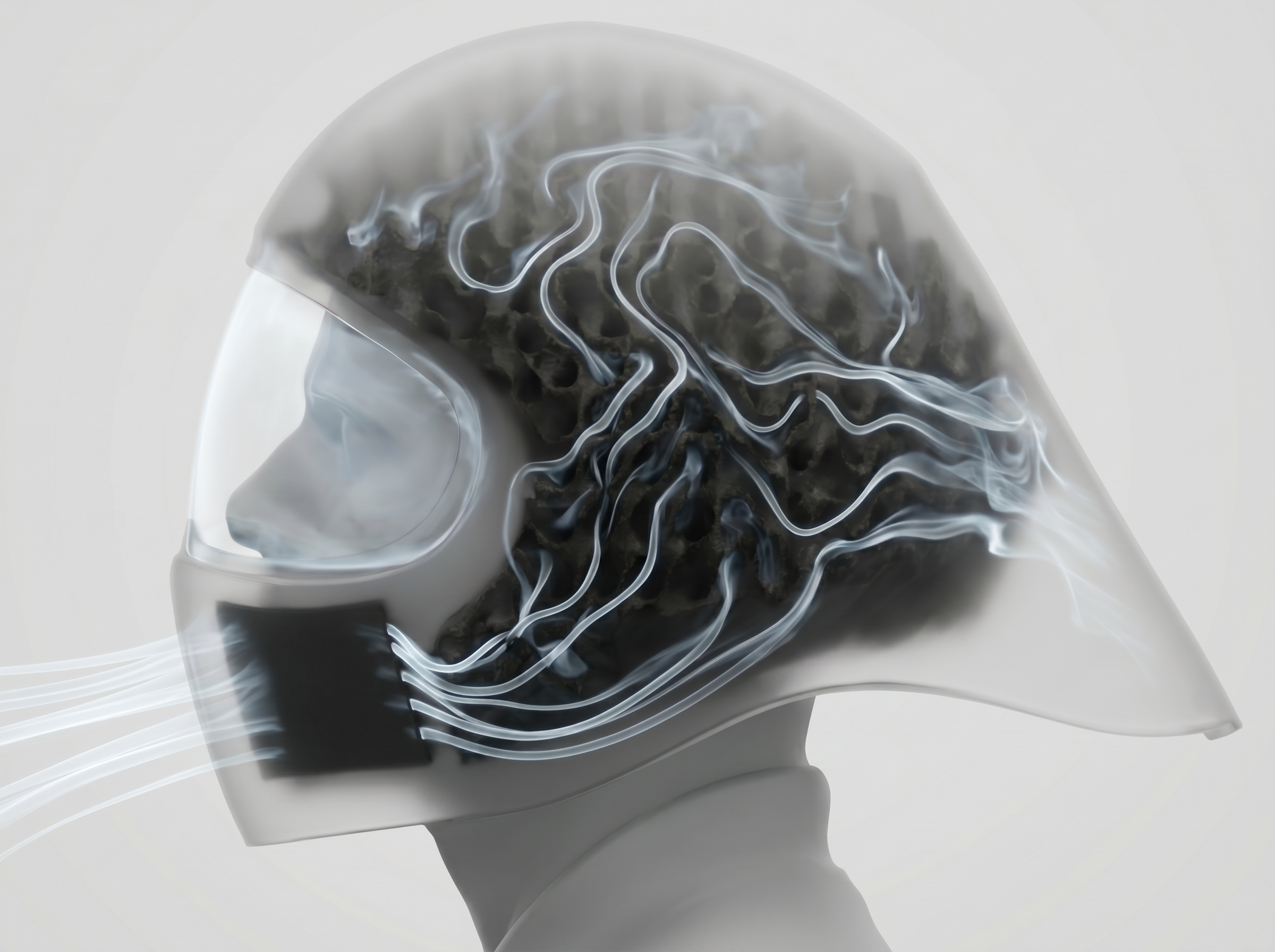
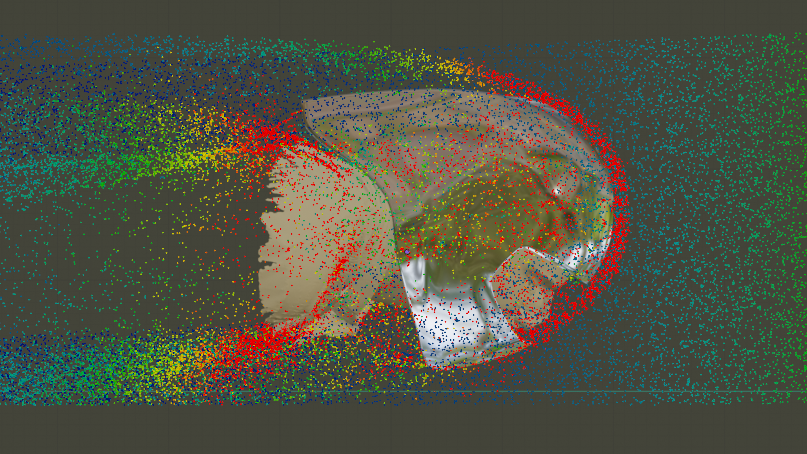
- Airflow: qualitative smoke test in Blender with the shell in the tuck position
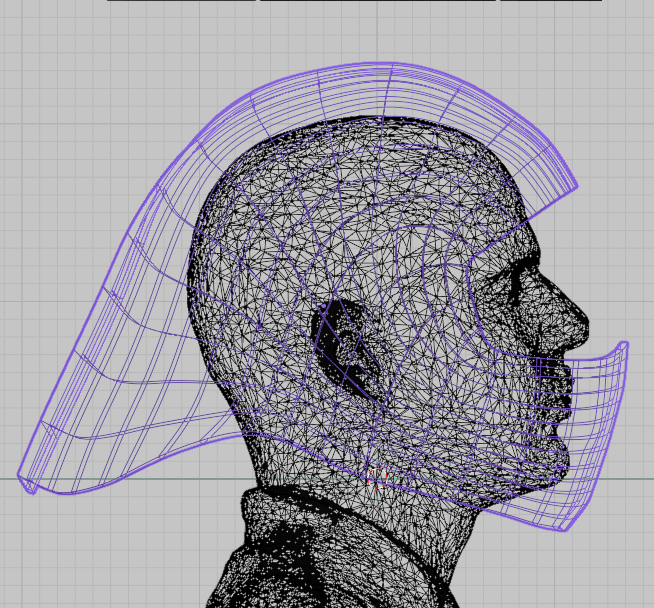

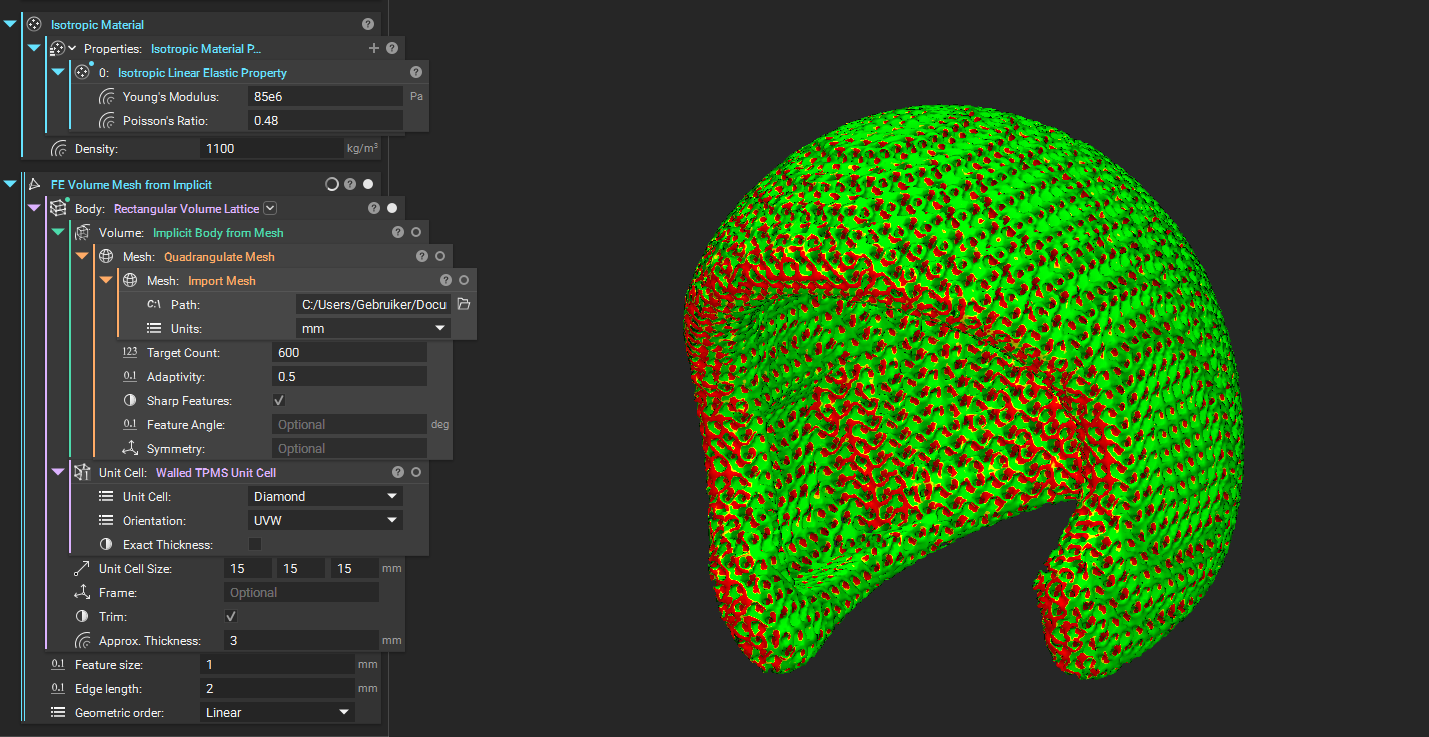
The lattice was developed in nTop, comparing multiple TPMS topologies, including Gyroid, Schwartz P, Diamond, and Lidinoid, for their energy absorption behavior.
- Homogenization: each unit cell’s mechanical response was homogenized in nTop before full scale simulation
- Simulation: FEA evaluated impact performance under EN 1078 loading across three zones, crown, lateral, and posterior
- Result: Gyroid consistently performed best among the topologies tested
- Personalization: lattice density and geometry adapted to the user’s 3D scanned head shape


| Impact zone | Displacement | Max Von Mises |
|---|---|---|
| Crown | 15.94 mm | 3.15 MPa |
| Lateral | 11.24 mm | 2.72 MPa |
| Posterior | 10.80 mm | 2.83 MPa |
Stress stays well below the material limit in every zone. The crown exceeds the 12 mm criterion, while the lateral and posterior zones come close.
Prototypes were built at 1:2 scale. The shell was printed in PETG and finished by hand. The liner was printed in TPU 90A on a modified Bambu Lab P1S, which confirmed the lattice structure and the press fit. MJF was too costly for this project, so it stays the production route. A qualitative smoke test in Blender checked how air flows over the shell in the tuck position.
4. Final concept and prototype
A modular full face helmet built for multi impact protection, personalized fit and repairability through additive manufacturing. Further experimental testing would be needed to validate multi impact performance, since EN 1078 alone does not certify it.