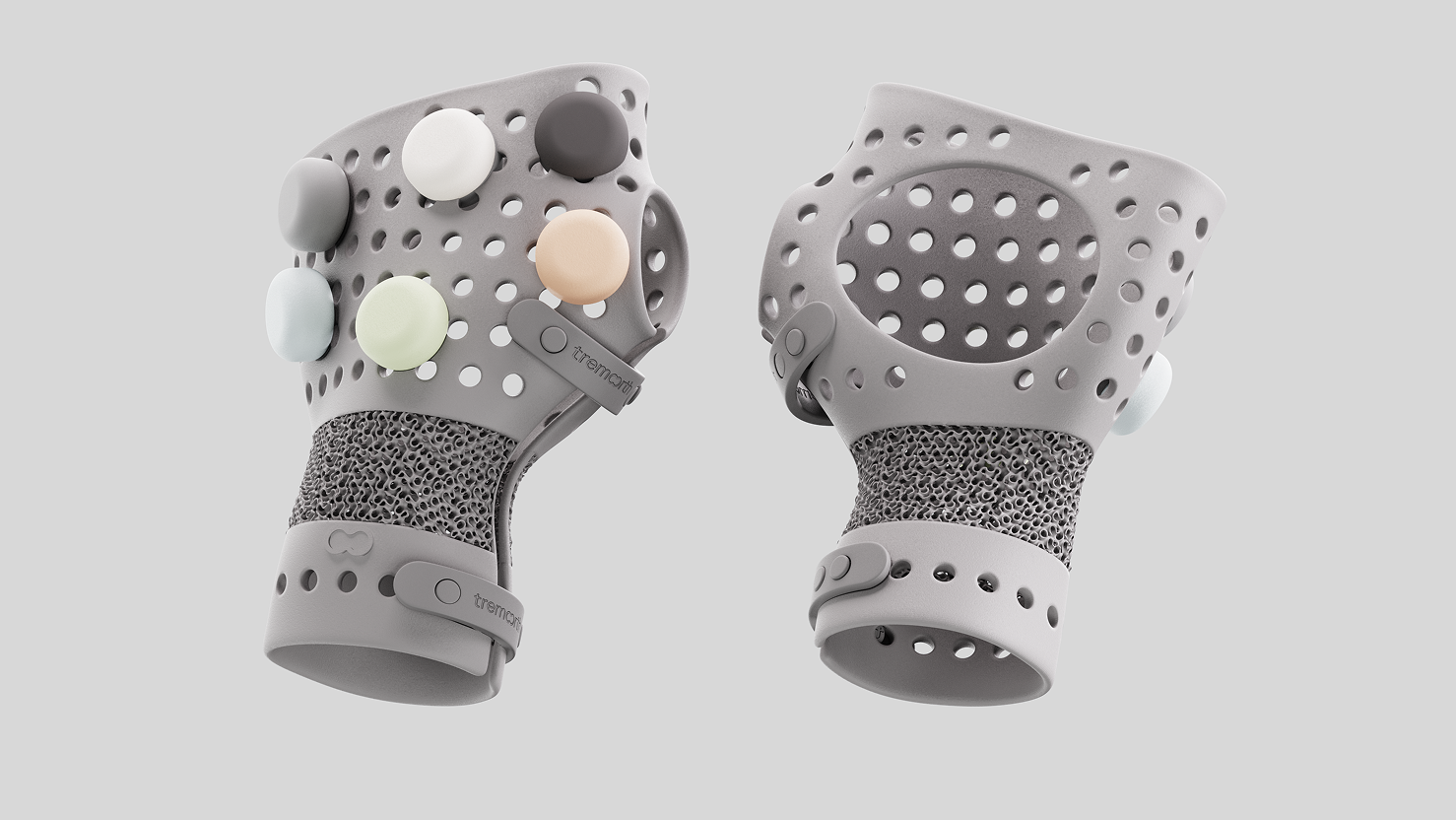
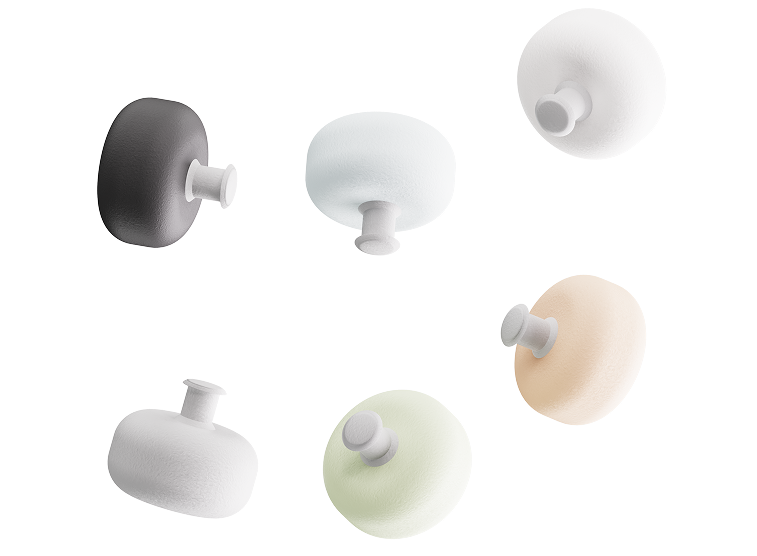
Tremoorth is a passive orthosis designed to reduce the amplitude of essential tremor through a modular weight system and an anatomically personalized fit. Developed using additive manufacturing, it combines biomechanical research with a design language that prioritizes comfort, usability and dignity.


1. Research
Essential tremor mainly shows up as an action tremor, meaning it occurs when a person holds a position against gravity or makes a voluntary movement, and is typically absent or minimal at rest. Beyond the tremor itself, some people also experience non-motor symptoms like anxiety, low mood, or fatigue.
The exact cause is unknown, but it likely stems from a mix of genetic factors (family history) and environmental influences

Symptoms
- Involuntary shaking during movement or when holding a position
- Usually absent at rest
- May also include anxiety, low mood, or fatigue
Causes
- Genetics and environmental factors
- Worsened by stress, fatigue, or caffeine
Key Finding
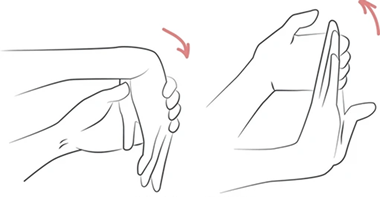
- Studies show that forearm rotation and wrist flexion/extension are the most severe movement tremors in essential tremor
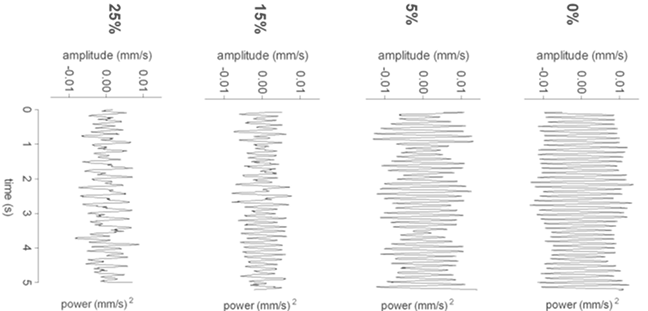
Adding Weight to Reduce Tremors
Adding a small amount of weight to the arm or wrist can reduce the visible shaking caused by hand tremors.
- Tremors come from two sources: a signal from the brain, and how the limb physically responds to that signal
- Adding weight changes how the limb responds, without touching the brain signal itself
- Heavier limbs move more slowly and resist rapid shaking, similar to how a heavy door swings slower than a light one
- This slows down the tremor and makes it smaller, backed by research in the field (Héroux, 2008; Lakie et al., 2015)
The Concept
ACCUM is a textile bracelet that measures and communicates a person’s accumulated radiation exposure in real time. Optical fibers running through the band shift in light and color as exposure rises, turning an invisible risk into a visible signal on the body, both for the wearer and for the community around them.
Lattice Structures & Gyroid Geometry
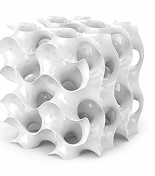
What are lattice structures?
- 3D open-cell configurations built by repeating a unit cell pattern (Maconachie et al., 2019)
- Known for being lightweight, strong, and effective at absorbing energy and reducing vibrations (Pan et al., 2020)
- Classified by the geometry of their unit cells, which determines their mechanical behavior.
Why gyroid?
- Among all analyzed configurations, gyroid offers the best combination of damping, flexibility, lightness, and isotropy
- Experimental data in TPU show gyroid has the highest damping ratio, meaning it dissipates vibrations more effectively — key for reducing involuntary tremors (Ekpelu, 2023)
- Its lower stiffness compared to other TPMS surfaces (like Diamond or Schwarz) allows voluntary movements to pass through while filtering out unwanted vibrations
2. Ideation
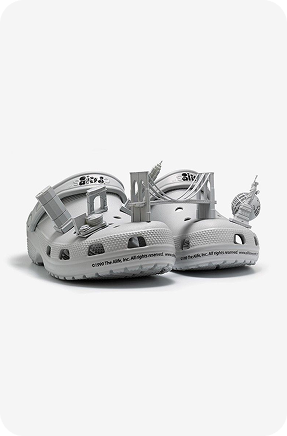
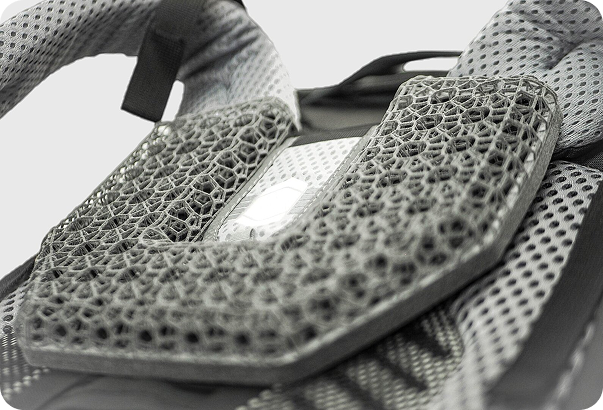
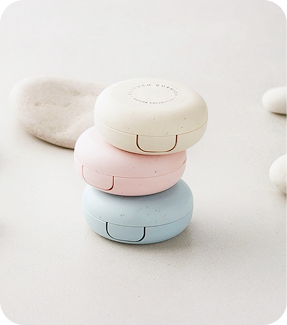
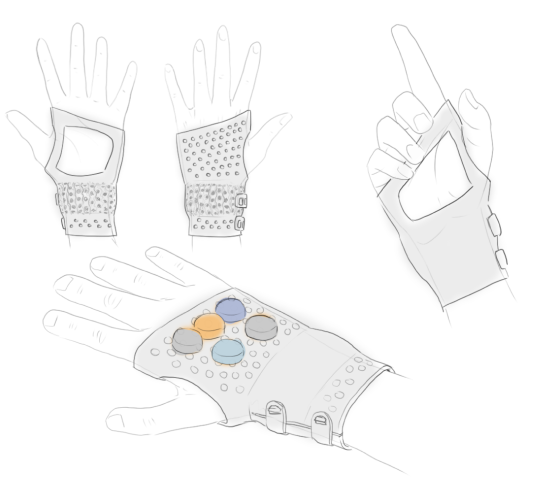
Drawing from references like Crocs, Nest Mini and lattice structures, the concept was defined: a passive orthosis made through additive manufacturing, with a modular weight system, anatomical personalization and an aesthetic that reduces stigma.

3. Development and prototyping
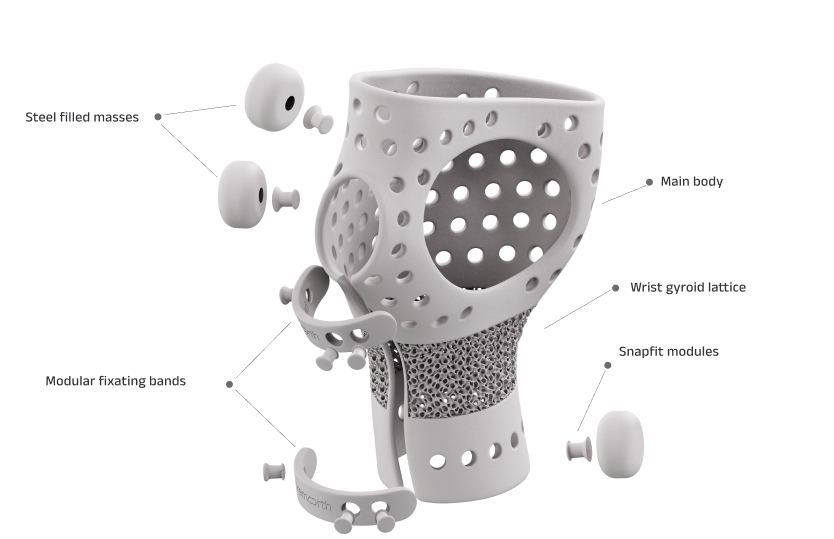
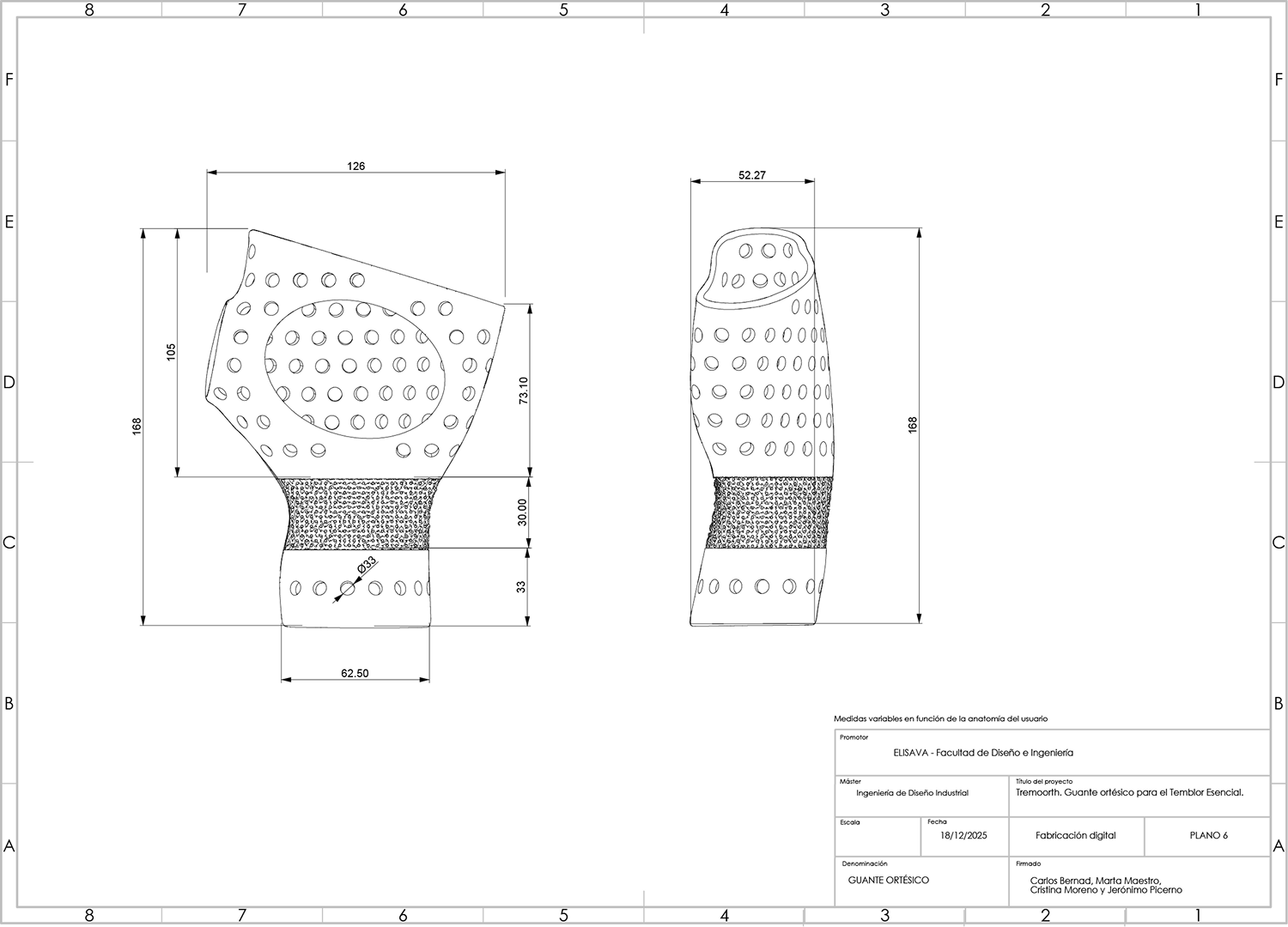
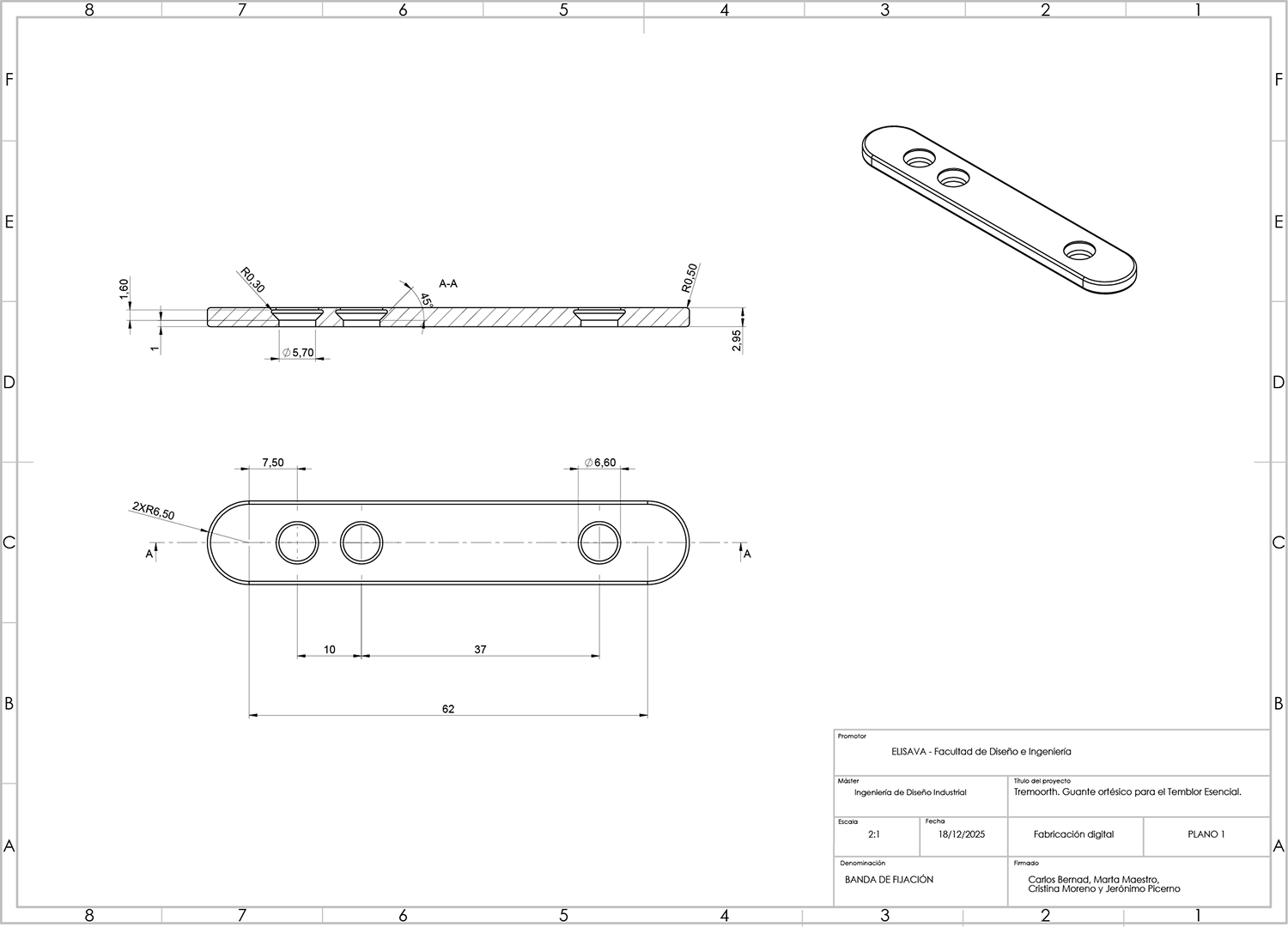
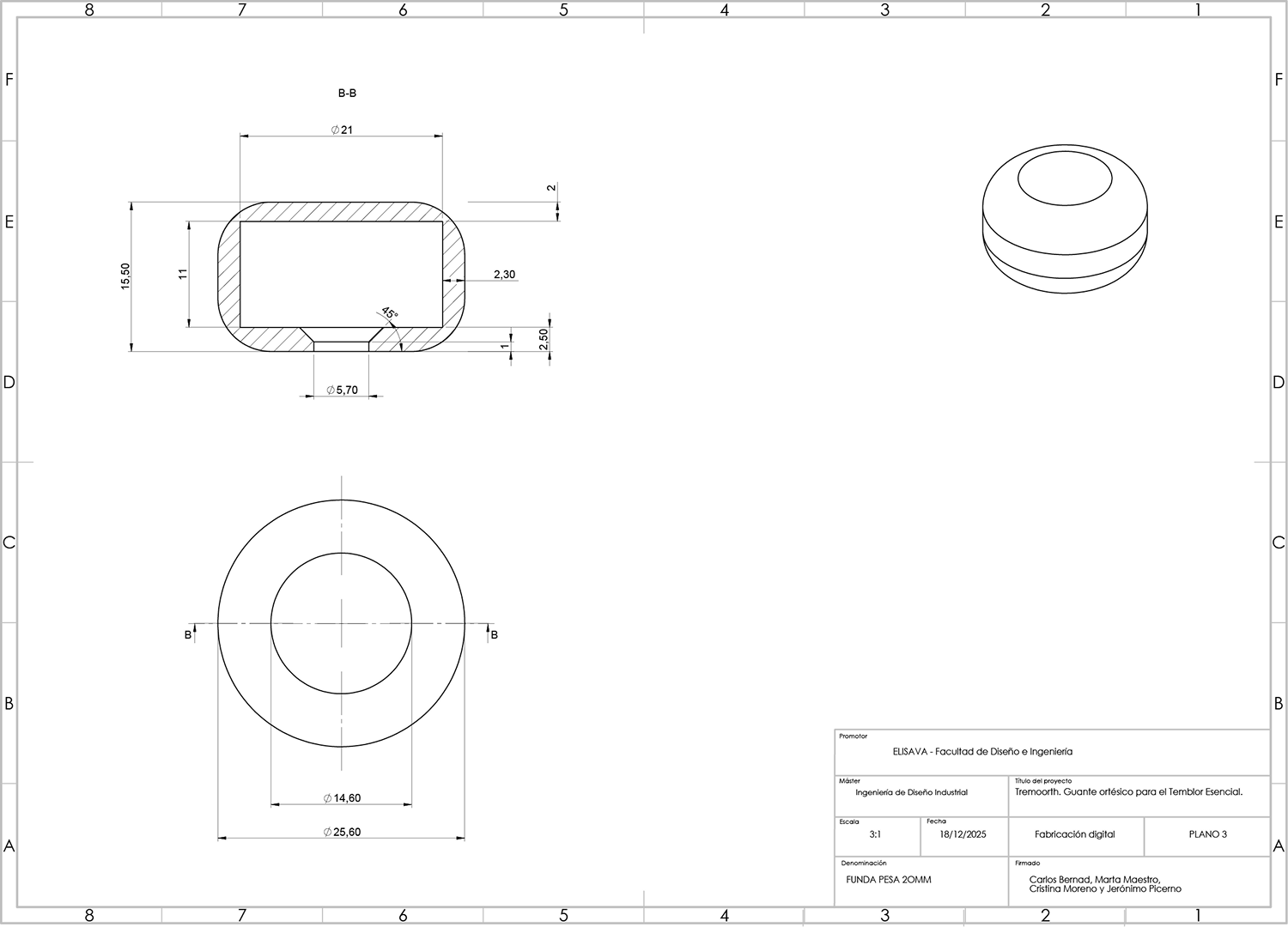
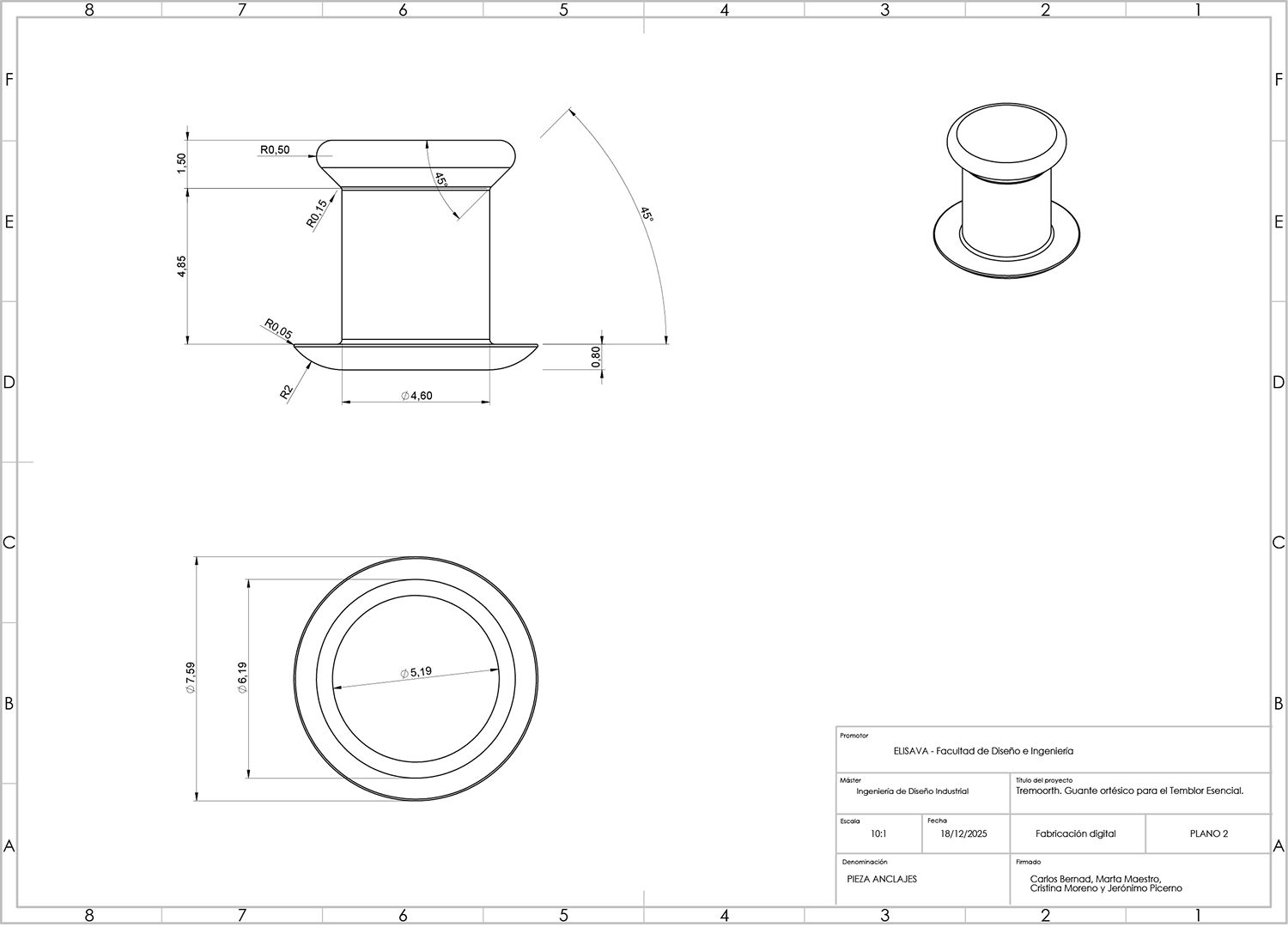
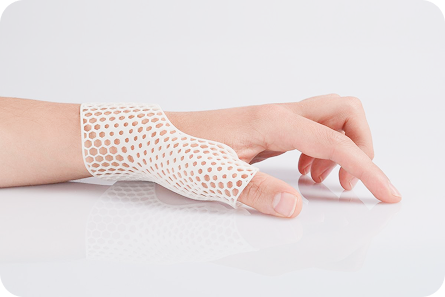
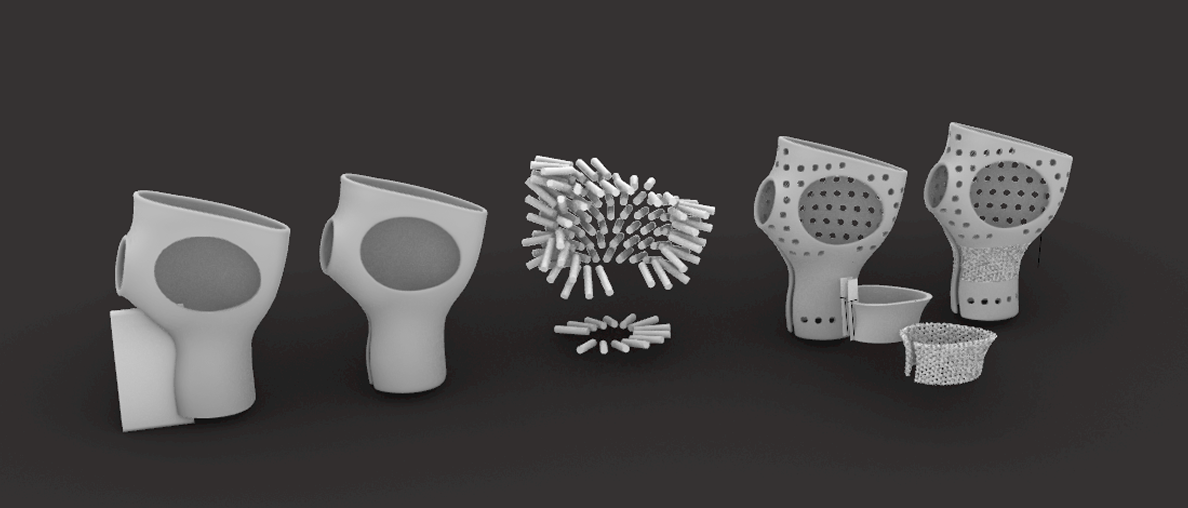
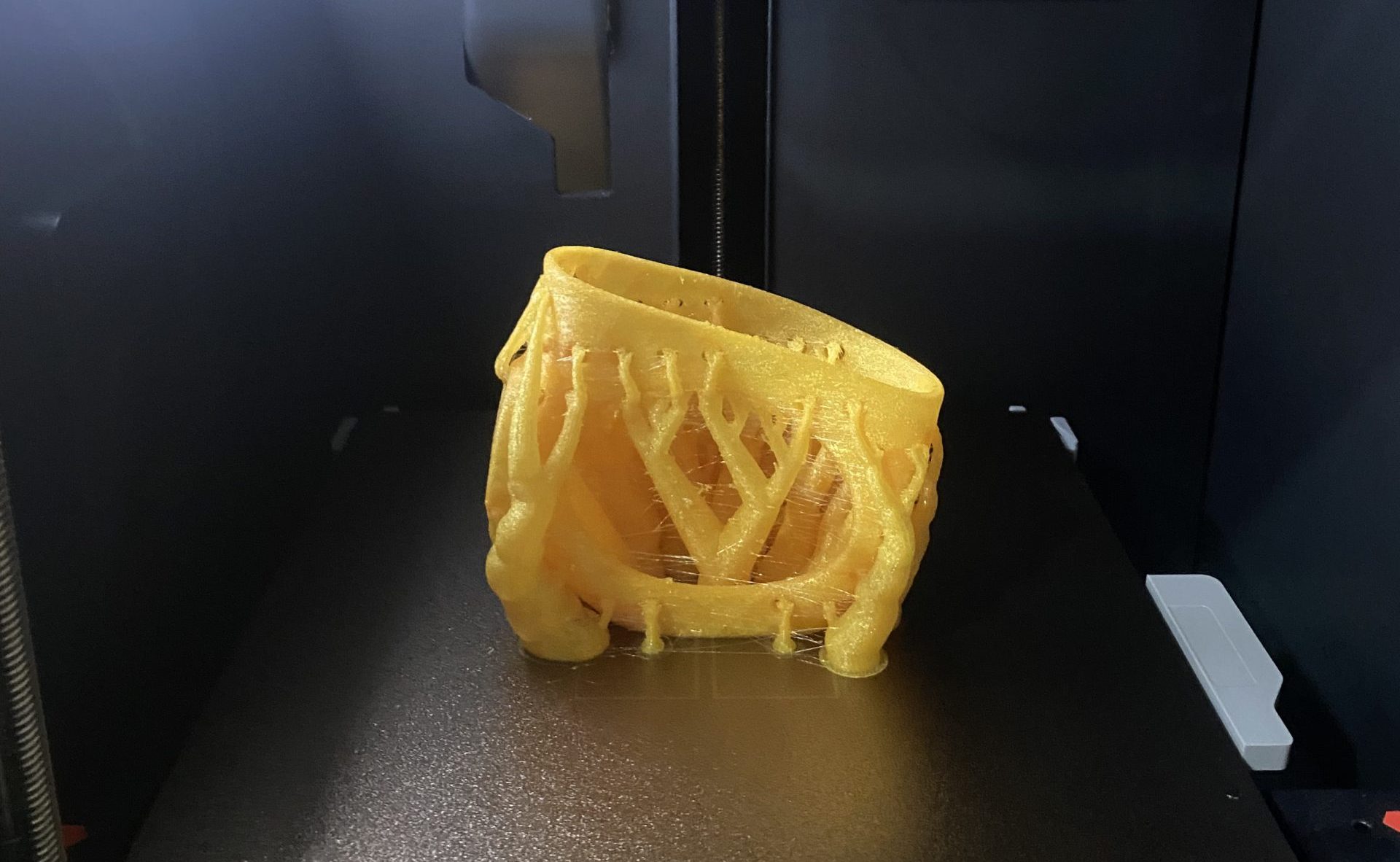
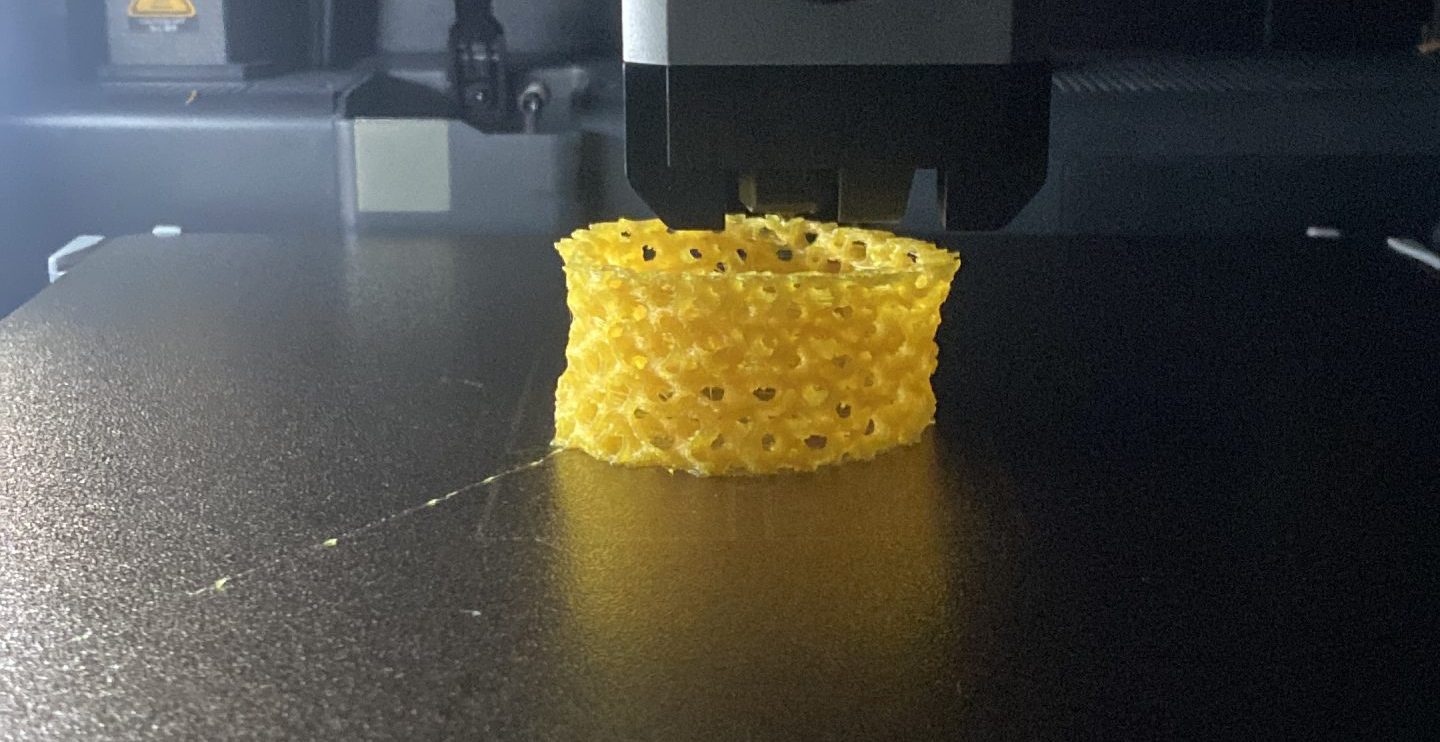
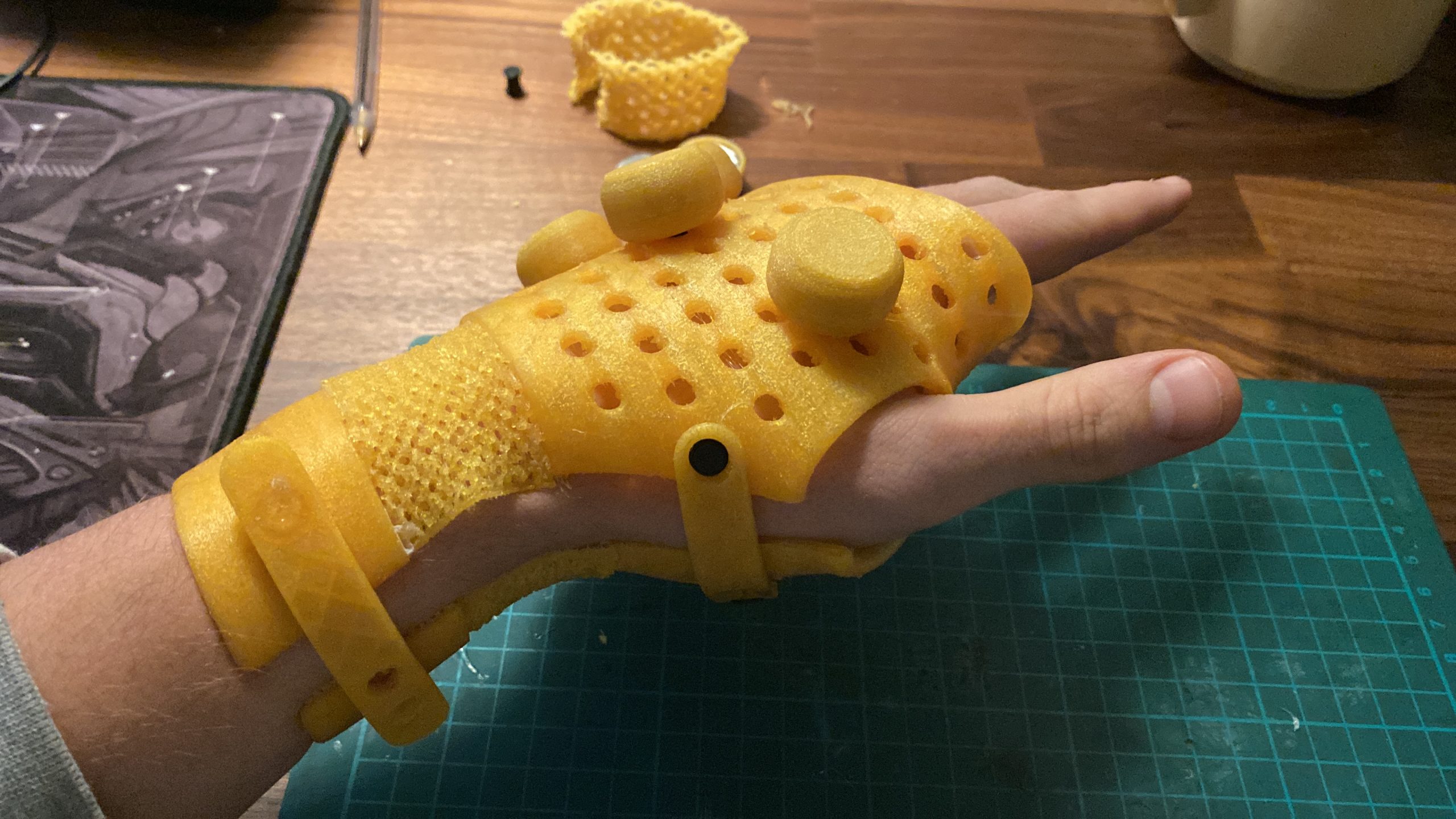
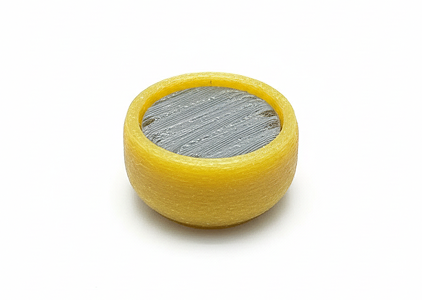
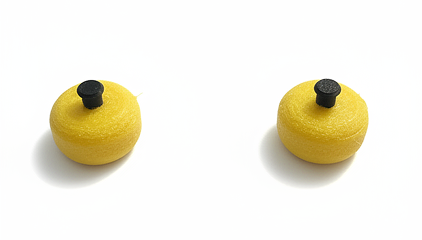
Parametric design in Rhinoceros and Grasshopper. A glove with gyroid structure, interchangeable weights and snap fit fastening bands. Manufactured using FDM for the prototype and Multi Jet Fusion for the final part. Functional prototype at 1:1 scale.


Prototypes
4. Final concept
A passive orthosis that reduces tremor amplitude with greater comfort than existing solutions, less interference with voluntary movement and a high degree of personalization, adapting to each user through a modular weight system and an anatomically fitted design.